Thursday, October 30, 2008

Watch Treasured Moments of Football Memories On Web TV


Have you heard of the Carlsberg web-tv before? This is a digitally broadcast of video clips and shots of different moments of glory, interesting facts, defeats and other epic moments covering various aspects of football. As in any sports or games, there will be many treasured moments, some hilarious, others of disappointments and yet others of the rewards of hardwork earned. This recently launched football web-tv is also called www.partofthegame.tv. There are actually 5 channels to cover classic football matches and also insight into the life of the football players.

Besides being a passive viewer, this site allows for interaction with fellow football fans. You can sign up as a member for free. As a member you can then create your profile, share videos, comment and rate on the existing videos, design your own profile shirt and much more. Other member benefits include receiving news and updates regularly and invitations to participate in ongoing competitions. So head over to the site and check out the latest videos there!


Reblog this post [with Zemanta]

Wednesday, October 29, 2008

So You Want To Make A Quilt

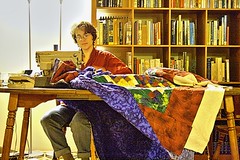
The face of a hobbyist
Image by Jeff Heard via Flickr
The process of making a quilt involves several basic tasks: measuring, cutting, marking and stitching. Each step has special tools and or techniques that can save time and make the project you choose easier to complete.

The first step is to select a quilt design or pattern, and your fabric. If you are a beginner, choose a simple design to begin with. Try to envision you finished quilt. What color do you want it to be? Do you want to incorporate different prints with solids? Prints may range from plaids to florals and even stripes. Solid fabrics come in just about every color imaginable. Cotton fabric is generally the easiest fabric to work with. Do not be afraid to experiment. All fabrics should be pre-washed in mild detergent and warm water, dried and pressed.

Step two involves measuring and cutting. If you buy quality-cutting tools, use them only for sewing. This will keep them sharp and make your cuts precise while saving time too. Rotary cutters are available in different sizes. They allow you to cut smooth edges on multiple layers of fabric quickly and easily. Small cutters work well on curves: larger cutters are great for long straight lines and many layers of fabric. Cutting mats should be used with rotary cutters. A good clear ruler is also a valuable tool. Sewing scissors and shears are also necessary. Accuracy is important in quilting. Taking the time to cut accurately will ensure your quilt pieces fit together perfectly.

Marking tools should be tested before you use them. You want the marks to come out easily without damaging the material. Special quilter's pencils are available with white or gray lead, and an eraser on the end. Other types include soapstone, which is made of pressed talc, and water-soluble, which is great for darker fabrics. Marks from both types may be removed with a damp cloth.

Step three involves stitching. Every quilt project should be layered and basted before the actual quilting is involved. Quilting pins should be used to hold pieces together. If you are hand basting there are special needles, with small round eyes, that are favored by quilter's. Use a single strand of white cotton thread to baste. You may however, prefer to use curved, rustproof safety pins to make the basting process quicker and easier.

Pressing at each stage of the construction is also important. Use the tip of the iron and move in the direction of the grainlines. The general rule of quilting is to press each stitched seam before crossing it with another.

Quilting is the fourth step. Quilting holds the quilt top, batting, and backing together. It also adds texture and enhances the design. You may quilt by hand or by machine. Hand quilting is the traditional method; machine quilting takes less time and is more durable.

Binding is the final step in creating a quilt. Binding fabrics may either match or complement the other fabrics in the quilt. Binding also helps to square up your finished quilt.


Reblog this post [with Zemanta]

Monday, October 27, 2008

Making Sense OF Quilt Patterns

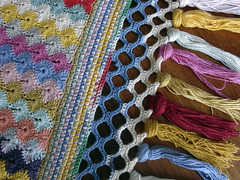
Crochet Quilt Pattern Detail
Image by poppalina via Flickr
There are literally thousands of quilt patterns already in existence, and more being designed everyday. If you are a beginning quilter it is best to stick to the simpler patterns. As you become more experienced, you will never run out of new patterns to try.

Some examples of simple patterns use squares. A Four Patch uses four squares of fabric sewn together to make one block. A Nine Patch uses nine small squares to make up one block. Different prints and colors can be mixed and matched to create different looks with these basic blocks. A Double Nine Patch is made up of nine 4-inch squares. The middle square is divided into nine 1 1/3 inch squares. Traditionally the large squares are cut from 4 dark and 4 light fabrics, while the small squares are cut from 4 light and 5 medium colored fabrics. Color combination may be varied to create different patterns.

The Churn Dash is another easy pattern. This block uses 3 different fabrics-2 designs and one background fabric. Variations of this pattern include the Grecian Design, the Greek Cross and the Wrench. There are three major pattern pieces: a 4 inch square, a 2x4 inch rectangle and a large triangle. The Log Cabin design is probably the most well recognized quilt pattern. It is made of strips of fabric sewn together to give the appetence of a log structure.

The names of quilt patterns often reflect certain aspects of life. Names such as Job's Tears, Bethlehem Star, Cross and Crown, Jacobs Ladder reflect the Spiritual aspect. Love and marriage is reflected in patterns like Hopes and Wishes, Lover's Knot, Double Wedding Ring and Cupid's Own. Every state has at least one pattern named after it. These include Ohio Star, California Rose and Carolina Lily. Not all quilt patterns are suitable for beginners. Drunkard's Path is definitely one. Once you have mastered it, it may quickly become a favorite.

Choosing fabric goes hand in hand with choosing a pattern. In fact there is great debate in quilting circles over which should be chosen first. While once quilts were made from scraps and leftovers, quilter's today have a wide variety of resources to choose from, and may purchase fabric expressly to create a quilt from it. One thing to remember is that it is better to buy to much fabric then to not have enough. Colors can't always be matched from different sources and runs.

Color is probably the most important aspect of any quilt. It is important to study tones, shades and hues. The easiest color scheme for a beginning quilter is probably monochromatic. This means one color, but different shades. Value is the lightness or darkness of a hue. A range of values provides contrast and depth to a pattern. A dominant color should be found in almost all of the quilt's blocks. An accent color should be used to create contrast and a blender color contains both colors in a pattern. When in doubt try a sample block first.


Reblog this post [with Zemanta]

Sunday, October 26, 2008

Safety First Timer Tips when Traveling through the Internet

Traveling can be in different forms. Either on land, air or sea, it is always mandatory to be safe at all times. Although another kind of traveling is now rampant and is continuously happening inside your own home. It’s journeying through the internet streets. Unlike traveling outdoors wherein you have to go through a lot of twists and turns and is quite exhausting, traveling indoors by means of your internet connection can be a breeze. Perhaps this is the first time you would encounter this kind of experience or if not, probably your kids or younger siblings, whoever it is, there are certain precautions and safety tips especially for first timers traveling through the Internet.

Interacting with people via the Internet can be risky and dangerous. Indeed, a lot of Internet users, even experienced ones, get molested, abused or fooled just by hanging out for about 15 minutes, talking to a stranger. Others can even get robbed because they were too honest and trustful of their identity that they are giving it all out. If you are just new, you can pick up some ideas on how to avoid this kind of predicament.

The secret when dealing with strangers through the Internet and making sure that you are safe every step of the way is through proper communication and keen observation. How? Pay attention:

When someone asks you things that are quite personal, like information about your real name or address, be alert. Never give out something as important as your home phone number, age, name of friends, and most especially, your family income. Not unless you know this person by heart, never spill out anything this valuable. You may put the lives of your family, friends and even yourself in danger.

If a certain company or a representative from a firm or agency tells you beautiful things on how to earn big, big bucks in just a couple of minutes or tells you that you can cultivate massive income in not less than a week, such an exaggeration can put you at risk. It can spell out catastrophe. Never give into their sweet words, that in the end, will entice you to give out something as important as your credit card number. This can turn out to be a scam and wipe out everything in your account. Before trusting anything, ask. Ask for the person’s or the company’s credibility, status and standing in the business that is being related.

Passwords are keys to another world and opens something personal or top secret. Never give this out nor share it even with your closest friends.

If you have met someone through online chatting, you have to be sure of the person’s identity and how far can he or she be trusted before meeting in person. Hope this doesn’t burst your bubble but there are syndicates roaming around the Internet waiting for their next victim so be very careful. If in doubt, you can ask someone to accompany you or meet somewhere public.

Treat the person whom you are talking to with respect even if the person’s not giving it back. Never try to send bad messages or use explicit or mean languages.

You have to be wary of strangers because not all have bad intentions. Others can be decent and are properly behaved. Just to be sure, always apply safety first when traveling trough the Internet.


Saturday, October 25, 2008

Choosing And Preparing Fabric

{{Potd/2006-03-26 (en)}}
Image via Wikipedia
Choosing fabric for a quilting project can be as much fun as doing the project itself. Even if to quilters choose the same quilt pattern, different choices of fabric will make each quilt unique. Most quilter's prefer using fabric that is 100 % cotton because they are easier to sew, mark, press and hand quilt. If you are shopping for fabric in a quilt shop you will rarely find fabric that is not pure cotton. Fabrics will also probably be arranged according to colors and print types.

With more experience fabrics other than cotton may be added for variety. Not all fabrics are suitable however. If you are using an unusual fabric for the first time, or want to use different types of fabrics together, try a small test block first. Fabrics of a medium density, with an even weave work well. Loosely woven fabrics are prone to distortion, as are stretch fabrics. Silk, lightweight wool and some plastics may be used with experience.

Both the color and tone of the fabric you choose will influence the overall effect of the pattern that you choose. Tone may be used to create depth and interest with greater effect than when using color alone. Good planning is necessary to achieve the desired look.

Color is greatly affected by the colors around it. Using contrasting colors will make pieces of a quilt block stand out from each other. Combing certain warm colors such as reds, yellows and oranges, in the same quilt block as cool colors like blues, greens or violets, will make them look more vivid.

Combining fabrics with various print scales and styles can add visual texture to your quilt. Interesting visual effects may also be achieved by using colors of graduated values. Printed cotton fabrics are available in many designs and styles including batiks, homespun plaids and florals, tiny-grained prints that look like solids, reproduction prints, and soft flannels. Solid-color fabrics come in just about every color, shade and tint that you can imagine.

Quilt blocks made from fabrics of the same or various shades of one color, but of contrasting textures can create pleasing results. Fabrics with a nap such as velvet, or fabrics with sheen like taffeta also provide interest.

Whatever fabric you choose for your quilting project, you must prepare it properly before you begin. Most cotton fabrics shrink when they are washed and dried. If you do not preshrink your fabric before you make your quilt, the fabrics may pucker at the stitching lines and the finished product may shrink in size the first time it is washed. This would indeed be a nightmare and your quilt would be ruined.

To prevent this wash all fabrics first in a washing machine on a short gentle cycle. Use cool or warm but never hot water. You may use a mild detergent, but it is not necessary unless the fabric is soiled. Wash like colors together in case they are not colorfast. Machine dry the fabric and press it with an iron. You are now ready to begin your project.


Reblog this post [with Zemanta]

Tuesday, October 21, 2008

Debt Consolidation During Difficult Times

Debt consolidation is one of the solutions often used to help less serious debts become more manageable. Debt consolidation is a process where an agreement is reached with your creditors to achieve the lowest and most affordable monthly obligation needed to satisfy all your credit accounts. Whether it is in favor for the lender’s interest to recover the money or the improvement for the debtor’s credit history, debt consolidation may be the best solution.

There are numerous ways to consolidate debt and it is possible for all, regardless of credit history. Debt consolidation is a booming business mainly because so many people are finally coming to the realization that dealing with debt is much easier and less stressful than most common people think. Nevertheless, different companies may charge different fees for their services and also late payment charges and this can affect your loan repayment plans. Do research a reliable credit counseling company that can better suit your financial needs.

Debt consolidation is the process of consolidating all of ones credit card payments, medical bills, and payday loans or personal loans into one low monthly payment. The debt consolidation services offered generally includes a debt repayment plan that eases your payments by reducing your interest rates, stop collection calls, erasing your late fees and  restore your credit rating. Consolidation can affect the ability of the debtor to discharge debts in bankruptcy, so the decision to consolidate must be weighed carefully.

There are other alternatives to a debt consolidation loan, where unsecured debt is not "shifted" to secured debt, but is eliminated through a settlement or payment plan. A settlement will cancel out a portion of the outstanding debt. For example, if a person has acquired $60,000 in credit card debt, a debt settlement may reduce the balance owed to $30,000. Debt settlement is not intended for a quick and easy fix to your debt problem as this resort may affect your credit history and thus prevent future lenders in extending a line of credit. 
Reblog this post [with Zemanta]

Monday, October 20, 2008

Free Course on Blogging Techniques

I'm evaluating a multi-media course on blogging from the folks at Simpleology. For a while, they're letting you snag it for free if you post about it on your blog.
It covers:
  • The best blogging techniques.
  • How to get traffic to your blog.
  • How to turn your blog into money.
I'll let you know what I think once I've had a chance to check it out. Meanwhile, go grab yours while it's still free.


Thursday, October 16, 2008

Choosing Quilt Fabric

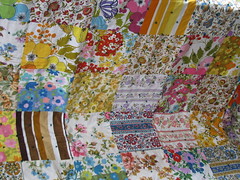
Thrifted Quilt Close upImage by suzyhomemaker via Flickr
There are many different types of fabric that may be used in patchwork, quilting and appliqué. The following information will help you identify and choose the best fabric for your projects.

Calico is a strong, plain weave fabric. It is available in a variety of weights and is usually white or natural with darker flecks.

Corduroy or fine-wale corduroy is a plain-weave fabric with vertical pile-effect ribbing. It frays easily
but is suitable for appliqué and large-scale patch pieces.

Cotton is the choice of most quilters. It is hard-wearing and easy to work with. Cotton comes in a wide range of plain and patterned print colors. It is the best choice for patchwork quilt fabric.

Felt is made from wool. It is non-woven fabric. Instead, the fibers are compressed with moisture and heat. Felt shrinks making it unsuitable for most articles that need frequent washing. It is ideal for appliqué

Gingham is a cotton or cotton blend fabric. Alternating stripes of colored and white threads in the warp and weft produces a checkered pattern.

Lawn is a fine crisp cotton, or cotton blend fabric. It is available in prints and plain.

Linen is fabric that is woven from fiber produced by the flax plant. Linen frays and creases easily but is suitable as a ground fabric.

Muslin is a white or natural open-weave cotton or cotton blend. This fabric is suitable for backing quilts and is also used in shadow quilting and appliqué.

Organdy is a fine cotton fabric that is starched. It is used for shadow work.

Organza is a gauzy fabric woven from silk or synthetic fibers. It may also be woven from silk and a synthetic blend. Organza is available in plain colors and with metallic and iridescent effects making it suitable for appliqué and shadow work. It is also sometimes used for delicate patchwork.

PVC is a plastic, cotton-backed cloth. It is difficult to work with because of its lack of flexibility. It is used for patchwork and appliqué.

Sateen is a soft fabric that has a surface sheen. It is a popular quilt fabric.

Satin is a shiny fabric that can be woven from cotton, silk, or synthetics. It is used in appliqué.

Silk is fabric that is woven from natural fibers produced by silk worms. It works well for almost any project and is available in a variety of textures, colors, patterns and weights.

Shantung fabric is woven from yarns of irregular thickness giving it an uneven surface. It is used for quilting and patchwork.

Taffeta is a plain-weave fabric with a two-tone effect. It is suitable for appliqué and small patchwork.

Velvet has a closely woven backing and a dense cut-pile surface. It is used in patchwork, especially crazy patchwork, but the nap should lie in the same direction as the patchwork.

Voile is a fine woven fabric that is used for shadow work

Wool is made from woven fleece. Wool does not launder well and should only be used for inlaid appliqué, unless it is lightweight. Light weight wool may be used in patchwork.


turkey in the straw for the troops


Tuesday, October 14, 2008

All About Thread For Quilting

The boom in quilting as a hobby and craft has caused manufacturers to produce a huge variety of thread. Yet you'll find there is such a wide selection of thread that choosing the correct thread for your quilting project can leave you scratching your head in puzzlement. You'll find an array of choices, whether you shop at a brick and mortar store on the internet. This article will shed some light on the confusing selection of thread for quilting.

Thread for quilting falls broadly into two categories- sewing thread and thread for embellishing. Let's discuss sewing thread first, as it is the most commonly used, especially for quilting projects. Sewing thread can be purchased in several different weights and fibers. Weights of thread can range from 28 to 60. Thread for quilting needs to be strong, and to stand the test of time, so generally you will want to choose a thread in the range of a 40 weight. Thread in the 28 weight range is most commonly used for embellishment, while 50 weight would be used for piecing. You can easily find the weight of the thread you are considering by reading the label. You may see a number like this: 40/2. The first number is the weight of the thread, the second the number of plies. In this example, the thread is a 40 weight of two plies.

Thread for quilting is most often made from cotton, rayon, polyester, metallic or plastic. The metallic and plastic thread will be used for embellishments and specialty stitches only. Cotton thread is common, and often it is mercerized. This is a process where the fiber has been made to swell and straighten out repeatedly, which removes any tendency towards fuzziness, and makes for a very high luster thread. Cotton thread is available in 30 to 60 weight.

Rayon thread is also highly lustrous, and polyester thread has a colorfast, non-shrinkable finish. The metallic thread choices are going to be a bit more difficult to sew with and are not for beginners, though they make for stunningly beautiful finished quilting projects. Some brands that quilters might want to look for include the old favorite Coats and Clark, Guterman, which is a popular alternative known for its strength and ease of use (try it for hand quilting), Madeira rayon thread, which is strong enough to use to embroider on denim or leather, and Mettler, which comes in several different fibers.

It is often not a good idea to attempt to use up old sewing thread, which tends to degenerate on the spool. Unreel a bit and pull on it. If the thread snaps, it will also snap when you put it in your sewing machine. With the wide variety of quilting thread, and its relatively low cost, there's no reason not to just buy new thread when you need a different color. You'll save a fortune in frustration alone.

Some manufacturers also produce special threads for embellishing, and you can find these at your local quilting store. If you like to quilt by hand, you can use embroidery floss, available in a multitude of color and fiber. Learning about the different kinds of thread can enhance your love of the craft of quilting.


Sunday, October 12, 2008

All About Quilting

Quilting is a craft that has been around for centuries. For hundreds of years, the Chinese have used quilted cloth for their padded winter clothing. The Crusaders found that the quilted shirts worn by Arabs offered a great deal of protection under their chainmail. They even brought the idea back home in the 13th century. The process was adapted by European women for the use in creating bedcovers.

Quilting came to America with the Pilgrims, in the 16th century. Lack of resources made it necessary for the settlers to recycle their clothing and other fabrics, they made quilt tops, cutting the fabric into smaller pieces and patching or clouting it over and over until it wore out completely. These first quilts were more practical than pretty, but as the settlers prospered the designs became more colorful and elaborate. Appliqué also became a popular way of decorating the quilts and the patchwork quilt was officially born.

Around this time quilts became associated with the celebration of important events. Specific designs were created for specific reasons. The Double Wedding Ring design was used to mark a marriage or anniversary. This design was made from interlocking rings, each constructed from tiny patches. It was a very time consuming project, and usually was worked by multiple quilter's at the same time.

These days' patchwork quilts are traditionally made from scraps left over from past sewing projects. Not all scraps are suitable for this purpose. Loosely woven fabrics, such as muslin, are weak and prone to distortion, while very tightly woven fabrics, such as ticking, are not flexible enough and hard to stitch. Cotton is the best fabric to use, especially for inexperienced quilters. Once a quilter is more experienced they may add other fabrics like silk, lightweight wool and so on.

The color of a quilt is up to the creator. Most quilters plan their project carefully, or follow an established pattern. Making test patches is a great way to experiment. Colors are usually sorted into tones, light, medium and dark. Using tone helps to create depth and design. Textured fabric also creates different effects.

Pre-wash all fabrics in mild detergent and warm water before starting a quilt. Any fabrics that may run should be washed separately. When the fabrics are dry they should be ironed, either with a steam iron, or a dry iron and a clean damp cloth.

Quilts are made of three layers. The top piece is the layer that is decorated and most elaborate. The middle piece is a layer of batting, or wadding, that provides warmth. The third piece is the backing. These three layers are held together with lines of stitching. These lines may be worked in a grid, in straight rows or elaborate patterns. Originally they were sewn by hand with a needle. Today some quilters still produce quilts this way, while others prefer machine quilting.

In the pioneer days the only equipment needed to produce a quilt included a needle, thread and material, and hopefully a pair if shears and a thimble. A wooden frame would be constructed to allow the quilter to use both hands, or to enable more than one sewer to work at a time. Quilting bees were popular social gatherings. Today many quilters prefer to use a large wooden hoop to make their projects more portable.


Friday, October 10, 2008

Article Software To Assist You In Your Blogging Business

The reason you ended up at this blog is that you are concerned about the effectiveness and worth of the article software you are currently using or possibly searching for. I'm going to tell you exactly like it is and how I would want it presented to me if I was looking for effective article software that will stop duplicate content dead in its tracks, while dramatically increasing my traffic, back-links, rankings, and potential revenues to my business. Then there's the problem of using clunky article software that runs from your own computer.

In the short time that I have, I want to explain to you how damaging it is submitting the exact same duplicate articles, and offer you a remarkable solution to overcoming this problem. Today's technologies have major search engine programmers and some of the large article directory sites equipped with sophisticated software to identify and filter out duplicate content. They use numerous metrics to evaluate Websites and pages of content to determine if an article has been duplicated on multiple sites. You must understand the importance of using an article software that will generate unique article versions. Affiliate marketing resources for affiliates and affiliate program managers tools, websites, books and articles.

The Instant Article Wizard is such a software that can help you formulate new articles in the shortest time possible. Check out the video tutorial to see how simple this can be done for you to churn out professional articles even if you have not much experience or knowledge in a particular topic.


Thursday, October 09, 2008

Learn to Quilt using A Beginner's Guide to Quilting


Whether you are new to quilting or an experienced quilter,
A Beginner's Guide to Quilting has tips and tricks to
improve your sewing and quiltmaking skills. This step-by-
step guide shows you exactly what to do with clear, easy-to-
understand instructions. In addition, the full-color
photographs illustrate each step along the way.


Yes! It is easy to make a quilt, and A Beginner's Guide to
Quilting takes all of the confusion and frustration out of
learning. Your first quilt can look like it has been made
by an experienced or professional quilter. Your family will
be stunned. You will be the envy of all of your friends
when you show them your completed first quilt.


Get your copy today! It is available at the click of your
mouse for only $17.00 at http://how-to-quilt.com, and
it comes with 5 special Bonuses.


http://how-to-quilt.com
Inspiration and Education for Beginning Quilters


Wednesday, October 08, 2008

Add Life to your Quilting with Embroidery

Embroidery is enjoying a resurgence in popularity, much the same as quilting and knitting and other hand crafts. Many crafters who enjoy quilting also end up enjoying embroidery and might feel as if they have torn loyalties-which craft to pursue in the small amount of time available for hobbies? The good news is that quilting and embroidery make excellent companions. Crafters who love quilting but are attracted to the depth and color that embroidery stitches offer can follow both their loves by combining the two crafts.

A quilt embellished with embroidered stitches is one of the most beautiful hand-crafted creations imaginable. Take a look at some of the "crazy quilts" from the Victorian era. These quilts are most often made of silk, often from leftover men's ties or other bits of fabric, and were pieced together in a random manner (hence the name) and then heavily embellished with embroidery. Even if your interest in quilting slants more toward traditional quilts, it's worth taking a look at these crazy quilts to get ideas for using embroidery to embellish your quilts. Crazy quilts use embroidery extensively, in many cases covering nearly every bit of the quilt's surface, but you can use touches of embroidery here and there on your quilts or quilted clothing to give it depth and texture.

Embroidery stitches are easy to learn, and you may even know some already. Browse through sites on the internet, and you'll find many with clear photos or pictures of embroidery stitches. Some common embroidery stitches you might want to use include blanket and chain stitch for outlining, and feather, herringbone, lazy daisy, straight and cross stitches for decorative touches.

I had my own experience in embroidery at school where I made an apron and it was pinned up at the back of my school classroom when I was 10 years old and that was some unforgettable event for me. Of course it was just a simple work but to have your handiwork displayed sure give me some pride in that. Back to quilts, I got my first quilt from grandma as a little girl and it really keeps my body and heart warm. It was made and stitched with love after all.

These days many quilters prefer to do their quilting by machine, instead of hand, and these same quilters may also prefer to do their embroidery by machine. With the huge variety of incredibly powerful sewing machines on the market, this is a snap. Many sewing machines have embroidery functions with extensive lists of stitches, which are as easy to accomplish as flipping a switch on the machine. As with embroidery floss, there are many specialty threads available for machine embroidery.


Zenni Optical for Cheap Online Eyeglasses

If you decide that buying eyeglasses online is for you, arming yourself with as much information as possible beforehand will help you get the most out of the experience. Find eyeglasses through optometrists, other eye doctors and optical stores near you. Learn about buying eyeglasses online by choosing the right style of eyeglasses. Understand the different types of lenses and find various eyeglass manufacturers.

Nevertheless, you need to consider certain issues when you buy eyeglasses online, because every pair of glasses is a custom-made item. Don't forget, before ordering eyeglasses online you will need a prescription from an optometrist or other eye doctor. Shopping for eyeglasses online provides the buyer with significantly more selection than he or she would find in a regular brick-and-mortar store. Buying eyeglasses online is becoming more popular than ever as there are huge bargains that can save you hundreds of dollars. Now there is an element of consumer responsibility for success in ordering eyeglasses online, ergo: the measuring and fitting that you would get at a walk-in optician has to be done by you.

Order your eyeglasses online at ZenniOptical.com for as little as $8 onwards and wait for it to arrive within 2-4 weeks depending on locality. This is a good deal for big families with limited budget. You can find some consumer's feedback here: http://clarkhoward.com/liveweb/shownotes/2007/06/27/12362/


Tuesday, October 07, 2008

The horrific world that we live in

These days people are really fearful of things happening. What I mean are the fraud cases whereby people get swindled or cheated. My mother sent me emails occasionally to warn me against certain unscrupulous individuals and the latest ones are rather scary. Some cases involved using our sympathy like a baby crying and when we go out the house to investigate, a knife will be pointing at our throat to rob us; a child coming to you to ask for directions to his home only to have you being mildly electrocuted and raped; going for "exotic" tours to have your relative/spouce missing and then a few years down the road see them being tortured on TV and more. There are many horror stories indeed involving tourists that I feel too disheartened to read further and absolutely no mood to go anywhere for holidays now.

Monday, October 06, 2008

A Notion About Notions

When you take up quilting, there are many notions, or items that will make your task easier and more fun. These specialty items are available online, in craft shops, department stores and quilt shops. While not all are necessary, they really do come in handy.

Metal-edged rulers are used when creating templates and when cutting cardboard and fabric with a rotary cutter or knife.

Metre rules are used with set squares to cut lengths of fabric.

Set squares are used to measure accurate right angles and are used with metre rules to cut lengths of fabric.

Tape measures are flexible measuring tools used for measuring lengths of fabric.

Pair of compasses are used for drawing circles.

Vanishing markers crate special marks that will fade n contact with water.

Dressmaker's wheels and chalk are used to directly mark fabric. The chalk will brush off.

Dressmaker's scissors and shears are used for cutting fabric only.

Paper scissors are used for cutting paper.

Embroidery scissors are small, sharp and often decorative scissors that are used in quilting to cut thread and trim fabric.

Pinking shears have serrated blades. They are used to create decorative edges and prevent fraying.

Rotary cutters are used with a cutting mat. They are great for cutting multiple pieces that are exactly the same, at the same time. Rotary cutters are available in different sizes. Small cutters work best for cutting curves and a few layers of fabric. Large cutters cut many layers at a time and are ideal for cutting long straight lines.

Cutting mats are made especially for use with rotary cutters. They protect both the tabletop and the blade. Mats with printed grids are useful for cutting right angles.

Quilter's needles are used for hand sewing appliqué and patchwork. Betweens are used for making smaller stitches.

Crewel needles are used for working embroidery stitches.

Quilting pins are longer than dressmaker's pins and pass through several layers of fabric easily.

Safety pins are sometimes used in basting quilt blocks together.

Beeswax is applied to quilting thread before stitching so that the thread passes smoothly through the fabric.

Thimbles are essential for hand quilting. They are used to push the needle through several layers of fabric at once. Many styles are available. Some quilters and sewers collect thimbles.

Unpickers-or rippers are used to remove stitches.

Irons are used for pressing patchwork seams and to remove wrinkles from fabric.

Embroidery hoops are used while quilting. Wooden frames are usually used for hand quilting. Plastic frames with metal spring closures are used for machine quilting.

Ribbon may be used to embellish appliqué or crazy patchwork. It may also be used to edge a border. Ribbon may be velvet, satin or manmade material.

Trimmings such as fringing, pompon tape; tassels and flat ribbon tape may be used to make unusual edgings or to embellish a patchwork piece.

Lace can be used to embellish appliqués.

Quilters' gloves offer protection when using rotary cutters and needles.

Needle threaders make threading needles a breeze.

Any of the notions listed above would make a great gift for your favorite quilter.


Wednesday, October 01, 2008

Stylish Kitchen Counter Top Stools

If you are opting for a spacious, contemporary and modern kitchen design, the bar stool has surged to popularity. Kitchen bar stools are the perfect fitting for any overhanging kitchen counter. Depending on the look you prefer, choices of counter height kitchen bar stools range from wood, metal, steel wrought iron or rattan, and even with or without backs.

Kitchen bar stools are stylistic and maximize the utility of the kitchen. Yes counter height kitchen bar stools enhances your kitchen and adds comfort to your seating as you read your newspaper, have breakfast and chat with your family or friends. Wood bar stools would be the perfect choice in bringing elegance and giving and authentic look to enhance your kitchen décor.

Counter height bar stools are designed for a counter that is 35 to 37 inches high. The seat of the counter height kitchen bar stool is 24 to 26 inches from the floor. As you shop for your ideal counter stools, be sure to have the correct height measurement and tape measure handy for the perfect fitting.

Indeed, counter bar stools are certainly a great way to add style, space and comfort to your kitchen.